
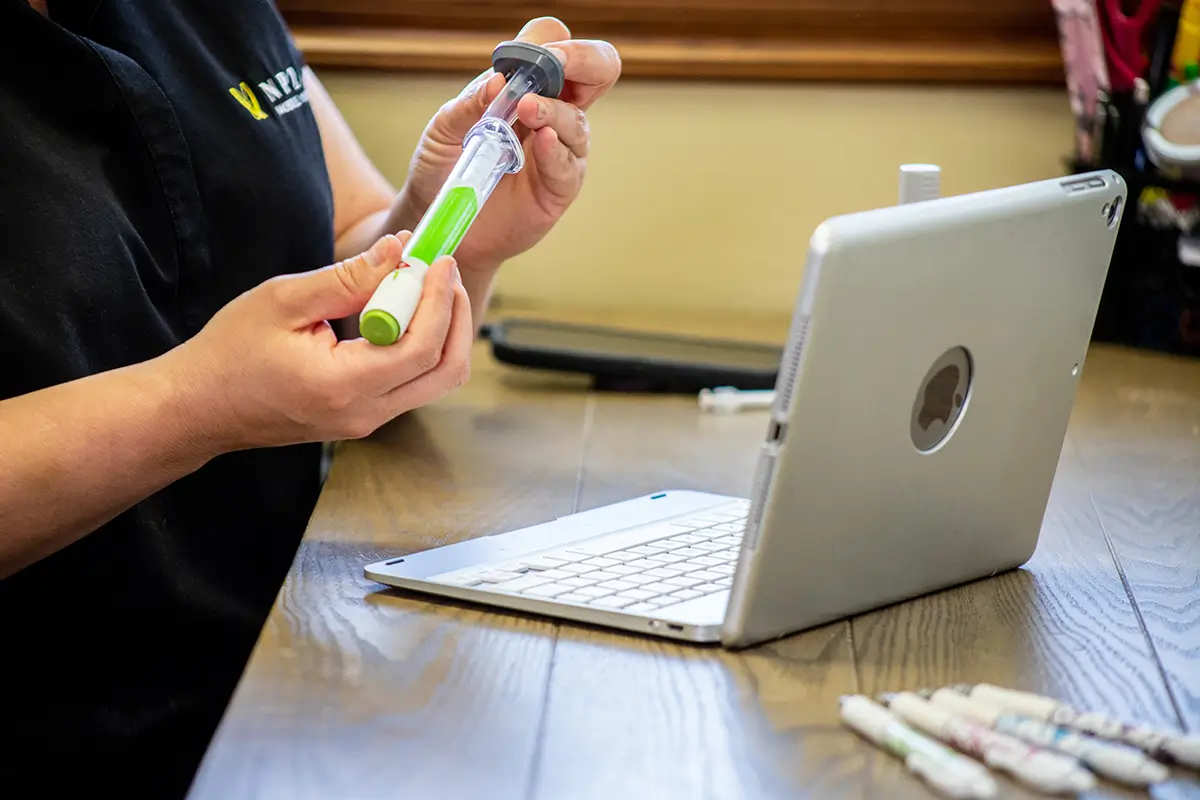
Injectable medications are gaining popularity in the weight loss world, giving hope to those who struggle with obesity or being overweight. Sermorelin and semaglutide are two well-liked options that are making waves for their different ways of helping people lose weight. But can you combine semaglutide and sermorelin?
Rapid weight loss, especially with GLP-1 medications, can sometimes lead to unintended muscle loss if not managed. Sermorelin is a growth hormone–releasing hormone (GHRH) analog that stimulates the body’s natural production of growth hormone, which plays a role in muscle maintenance, fat metabolism, recovery, and overall wellness.
Combining semaglutide and sermorelin under strict medical supervision may promote a targeted fat loss with support for lean muscle preservation and metabolic function.
At NP2GO in Oklahoma, we offer both therapies and help you customize your treatment based on your unique needs. Let’s explore how you can combine these two treatments and their benefits.
What Is Semaglutide?
Semaglutide is a prescription medication classified as a GLP-1 receptor agonist. It mimics a naturally occurring hormone in the body called glucagon-like peptide-1 (GLP-1), which helps regulate appetite, insulin secretion, and blood sugar levels after eating.
Semaglutide activates GLP-1 receptors in the brain and pancreas, suppressing your appetite and signaling you to feel full. When used in combination with a balanced diet and regular exercise, semaglutide has been shown to help people lose approximately 15% of their body weight over 68 weeks.
It has also been shown to reduce the risk of major cardiovascular events, such as heart attack, stroke, and cardiovascular death, by around 20% in overweight or obese adults, including those without diabetes.
Semaglutide supports weight loss through multiple mechanisms:
- Reduces appetite by signaling fullness to the brain
- Slows gastric emptying, helping you feel satisfied longer
- Decreases overall calorie intake without extreme dieting
- Improves metabolic control, especially in people with insulin resistance
Semaglutide is available under several brand names depending on its form and indication:
- Ozempic: A once-weekly injectable approved for people with type 2 diabetes and commonly prescribed off-label for weight management.
- Wegovy injection: A once-weekly injectable approved specifically for chronic weight management in certain adults and adolescents ages 12 and older with obesity or overweight with weight-related conditions, such as diabetes, high blood pressure, and high cholesterol. Wegovy is also approved to treat people with metabolic dysfunction-associated steatohepatitis (MASH) who have moderate-to-advanced liver scarring (fibrosis), but not cirrhosis, in combination with a lower-calorie diet and increased exercise.
- Rybelsus: An oral (daily pill) version of semaglutide approved for type 2 diabetes management. It’s also approved to reduce the risk of MACE in people with Type 2 diabetes who are at increased risk for these events. While not FDA-approved specifically for weight loss, it may support modest weight reduction due to its GLP-1 activity.
- Wegovy pill: An oral (daily pill) version of Wegovy. The Wegovy pill is approved for weight loss in adults only. In clinical trials, people using the Wegovy pill lost an average of almost 14% of their initial body weight.
What Is Sermorelin?
Sermorelin is a synthetic form of growth hormone–releasing hormone (GHRH), a naturally occurring hormone that stimulates the body to produce its own growth hormone (GH).
Rather than replacing growth hormone directly, sermorelin works by signaling the pituitary gland to produce more of your own human growth hormone (HGH), helping support energy, recovery, body composition, and healthy aging under medical supervision.
This makes it different from synthetic human growth hormone (HGH), because it supports the body’s own hormonal rhythm instead of overriding it.
When administered (normally through a subcutaneous injection before bedtime), sermorelin works by binding to GHRH receptors in the pituitary gland. This signals your body to release GH in natural, rhythmic pulses that mimic the body’s natural hormone production patterns seen in your younger years.
This, in turn, stimulates the liver and other tissues to produce insulin-like growth factor 1 (IGF-1).
As growth hormone and IGF-1 levels reach healthy ranges, the hypothalamus naturally reduces stimulation, helping prevent excessive hormone production while maintaining hormonal balance.
Semaglutide vs. Sermorelin: What’s the Difference?
Semaglutide is a GLP-1 receptor agonist. It mimics a natural gut hormone that regulates hunger and insulin secretion. By acting on appetite centers in the brain and slowing gastric emptying, it helps reduce calorie intake and improve glycemic control.
Sermorelin, on the other hand, is a GHRH analog. It stimulates the pituitary gland to release the body’s natural production of GH, which influences muscle repair, fat metabolism, sleep, and recovery.
Semaglutide primarily promotes fat loss by reducing appetite and caloric intake. However, like most rapid weight-loss interventions, this process can lead to a reduction in both fat mass and lean mass (muscle and bone) if muscle preservation strategies (such as resistance training and adequate protein intake) are not emphasized.
Sermorelin does not directly suppress appetite or cause weight loss. Instead, it may support lean muscle maintenance, fat metabolism, recovery and repair, and sleep quality.
The table below summarizes the difference between semaglutide and sermorelin.
| Feature | Semaglutide | Sermorelin |
| Main purpose | Support weight loss and blood sugar control | Promotes the body’s release of human growth hormone |
| Appetite suppression | Yes | No |
| Fat loss support | Direct (through calorie reduction) | Indirect (via GH & metabolism) |
| Muscle preservation | Not its primary function | Supports lean muscle maintenance |
| Typical dosing | Weekly subcutaneous injection | Often, a daily subcutaneous injection |
Can You Take Semaglutide and Sermorelin Together?
Yes, semaglutide and sermorelin can be prescribed together under medical supervision.
Because they work through different hormonal pathways, your provider may combine them to support fat loss while helping preserve your lean muscle mass and metabolic function.
When combined, semaglutide and sermorelin can help in body optimization. While semaglutide helps regulate appetite and enhance metabolism, sermorelin boosts the production of HGH, which can promote fat loss and muscle gain.
It’s important to note that this combination should only be used under the strict supervision of a healthcare provider. Sermorelin may not be suitable for people with a history of cancer or pituitary tumors or during pregnancy/breastfeeding.
This combination works best when accompanied by a high-protein diet and regular strength training.
Benefits of Combining Semaglutide and Sermorelin
The potential benefits of combining semaglutide and sermorelin include enhanced fat loss, improved muscle retention, increased energy, and improved overall body composition when used under medical supervision:
1. Synergistic weight loss and muscle retention
Semaglutide causes significant fat loss, but it can also lead to a loss of lean muscle mass. Sermorelin, which stimulates the production of HGH, acts as an anabolic agent that helps preserve or build muscle while losing fat.
2. Improved metabolic rate
Sermorelin increases IGF-1 levels, which helps maintain a higher metabolic rate even when in a calorie deficit. This counteracts the metabolic slowdown that often occurs during rapid weight loss.
3. Enhanced fat burning
Combining semaglutide with sermorelin may improve the fat-burning process. Semaglutide reduces overall calorie intake by controlling appetite, which creates the energy deficit needed for fat reduction.
By stimulating natural growth hormone production, sermorelin may support lipolysis—the breakdown of stored fat for energy. Growth hormone is especially involved in regulating visceral (abdominal) fat metabolism.
4. Increased energy and vitality
While Semaglutide may cause initial fatigue due to reduced calorie intake, Sermorelin helps boost energy levels, improve sleep quality, and improve overall vitality.
5. Better safety profile
Unlike synthetic HGH, sermorelin encourages the body to produce its own HGH, allowing for a more natural hormonal balance and lower risks compared to direct HGH injections.
Who Is a Good Candidate?
Not everyone needs both semaglutide and sermorelin. The right approach depends on your metabolic health, weight-loss goals, hormone levels, and medical history. Your healthcare provider should perform a full evaluation before recommending combination therapy.
Your provider may consider this combination if you:
- are losing weight but concerned about muscle loss
- have hit a weight-loss plateau
- experience low energy or poor recovery
- are experiencing age-related hormonal decline
- want to focus on body recomposition rather than scale-only weight loss
Who should avoid?
Combination therapy may not be appropriate for people with:
- Personal or family history of medullary thyroid carcinoma
- Multiple Endocrine Neoplasia syndrome type 2 (MEN2)
- Active malignancy
- Uncontrolled endocrine disorders
- Certain untreated sleep disorders
- Pregnant or breastfeeding
Potential Side Effects of Semaglutide and Sermorelin
Because these medications work through different hormonal pathways, their side effect profiles are also different. Semaglutide causes gastrointestinal issues, while sermorelin causes injection site reactions and hormonal changes.
Common semaglutide side effects:
- Nausea
- Vomiting
- Diarrhea
- Constipation
- Decreased appetite
- Bloating
- Mild fatigue
- Dizziness
These symptoms are often dose-related and may improve as the body adjusts.
Less common but more serious risks:
- Pancreatitis
- Gallbladder issues
- Worsening diabetic retinopathy (in patients with diabetes)
- Risk of thyroid C-cell tumors (observed in animal studies; contraindicated in patients with a history of medullary thyroid carcinoma or MEN2)
Always disclose your personal and family medical history before starting therapy.
Common sermorelin side effects
- Injection site redness or irritation
- Mild headaches
- Flushing
- Dizziness
Possible hormonal effects
Because sermorelin influences growth hormone and IGF-1 levels, excessive dosing or improper monitoring may lead to:
- Joint discomfort
- Swelling
- Carpal tunnel–like symptoms
- Elevated IGF-1 levels
Routine monitoring may include symptom tracking and periodic lab testing to ensure levels remain within appropriate ranges.
FAQs About Semaglutide and Sermorelin
Are semaglutide and sermorelin safe together?
Semaglutide and sermorelin may be used together under qualified medical supervision, but safety depends on individual health factors, proper dosing, and ongoing monitoring.
As with any medical treatment, it’s important to have a personalized evaluation and follow-up care to minimize risks and optimize results.
Is sermorelin a steroid?
No. Sermorelin is not a steroid. It is a growth hormone–releasing hormone (GHRH) analog that stimulates the body’s natural growth hormone production rather than replacing hormones directly. Steroids work differently by directly altering hormone levels.
Does sermorelin help with belly fat?
Sermorelin may support the reduction of visceral fat by increasing natural growth hormone levels, which help regulate fat metabolism. However, it is not a direct fat-burning medication. Best results occur when combined with healthy nutrition, strength training, and medical guidance for body recomposition rather than weight loss alone.
Can sermorelin replace semaglutide?
No. Sermorelin and semaglutide serve different purposes. Semaglutide helps reduce appetite and promote weight loss. Sermorelin supports natural growth hormone production for recovery, muscle support, and metabolism. They may sometimes be used together, but they do not replace each other.
Does semaglutide reduce muscle mass?
Semaglutide does not directly cause muscle loss, but rapid weight loss can reduce some lean mass if protein intake and resistance training are not maintained.
How long does it take for sermorelin to work?
Some patients notice improved sleep and energy within weeks, while body composition changes may take 8–12 weeks or longer. Sermorelin works gradually by stimulating natural growth hormone production, so results depend on lifestyle factors, dosage, and metabolic health.
Can you build muscle while on semaglutide?
Yes. Muscle can be built while using semaglutide when combined with strength training and adequate protein intake. Because semaglutide mainly controls appetite and calorie intake, muscle growth depends on proper nutrition and exercise rather than medication alone.
Semaglutide and Sermorelin in Oklahoma
The combination of semaglutide and sermorelin offers a unique approach to weight management that targets both fat loss and muscle preservation.
GLP-1 therapies such as Wegovy, Ozempic, and dual GIP/GLP-1 options like Zepbound are highly effective at reducing appetite, lowering calorie intake, and improving metabolic health. However, they are not specifically designed to preserve lean muscle mass during rapid weight reduction.
That’s where sermorelin may play a supportive role. By stimulating the body’s natural growth hormone production, sermorelin may help maintain lean muscle tissue, support recovery, and improve overall body composition during fat loss.
However, this combination should only be used under the strict supervision of a healthcare provider.
At NP2GO, every treatment plan begins with a comprehensive medical evaluation, including a review of your health history, current medications, and metabolic goals. When appropriate, we may ask for lab testing and ongoing monitoring to help ensure safe dosing, proper response, and long-term success.
If you are located in Oklahoma City, Tulsa, Norman, or the surrounding area, NP2GO provides structured, medically supervised programs designed for long-term results.
If you’re ready to explore semaglutide and sermorelin in Oklahoma, schedule your consultation today for expert guidance.