
Menopause is the normal stage in a woman’s life that usually occurs in her late 40s to early 50s, marking the end of menstruation and a sharp decline in her production of estrogen, progesterone, and testosterone.
This hormonal change affects almost every system in a woman’s body, which can bring symptoms like fatigue, mood swings, hot flashes, night sweats, and weight gain. These symptoms are more than just annoying; they can have a significant impact on confidence, sleep, and overall quality of life.
While hormone replacement treatment (HRT) is still a reliable option, women now have more options to support their natural balance and well-being thanks to scientific advancements, including peptide therapy.
At NP2GO, we take a personalized, medically guided approach to menopause care. Through comprehensive evaluations, virtual visits, and ongoing provider oversight, we help women understand their options and determine whether therapies like peptides may fit into their overall wellness plan.
What Are Peptides?
Peptides are short chains of amino acids that are similar to proteins in composition. The main difference is their length. Peptides often contain 2 to 100 amino acids, while proteins are longer and include more than 100 amino acids.
Your body naturally produces peptides that serve different bodily processes, including hormone production, immune function, and cellular signaling.
Peptide levels may decrease due to various factors, including aging, chronic stress, and hormonal changes such as those experienced during perimenopause and menopause.
Peptide therapy uses peptides to trigger specific functions in the body, acting as signaling molecules to improve biological processes like tissue repair, muscle growth, fat loss, cognitive function, and hormone regulation.
Peptide therapy is administered via injections, creams, or supplements, but it requires consultation with a healthcare provider.
Can Peptides Help with Menopause Symptoms?
Peptides can help manage specific menopause symptoms, but they are not a cure for menopause.
Unlike HRT for menopause, peptides do not replace hormones. Instead, they work on the problems that hormone loss causes. When estrogen and progesterone levels decline, it affects your metabolism, sleep, tissue repair, and inflammation. Peptides send targeted signals to support these systems.
Here is how they can help:
Metabolism and weight gain
Menopause comes with weight gain around the belly (visceral fat) and a slower metabolism. When combined with diet and exercise, peptides like semaglutide and tirzepatide have been shown to work by mimicking natural hormones to reduce appetite, increase fullness, regulate blood sugar, and slow stomach emptying, leading to lower calorie intake and fat loss.
Muscle loss and bone weakness
Estrogen plays an important role in maintaining the health and function of the musculoskeletal system. The decline in estrogen that happens during menopause can lead to muscle loss (sarcopenia) and bone weakness (osteoporosis).
Growth Hormone Secretagogues (GHS), like sermorelin and CJC-1295, work by stimulating your pituitary gland to produce more of your own natural, pulsatile growth hormone. This can support muscle protein synthesis, improve exercise recovery, and contribute to bone-building activity, combating sarcopenia and osteoporosis risk.
Poor sleep and brain fog
The declining hormones can disrupt sleep cycles and affect brain function during menopause. Peptides like Sermorelin and NAD can help by supporting natural growth hormone production, improving cellular energy, and regulating sleep cycles.
Skin issues
Declining estrogen and progesterone cause a decrease in collagen production, elastin, and sebum oil. The changes, then, reduce skin hydration, firmness, and volume.
Oral collagen peptides have robust clinical evidence for improving skin elasticity, hydration, and dermal collagen density.
What Peptides Are Good for Menopause?
Some of the most prescribed peptides to treat menopause symptoms include:
1. GLP-1 peptides
GLP-1 peptides are known for supporting metabolism and appetite regulation. During menopause, many women struggle with weight gain or changes in body composition. GLP-1s help regulate blood sugar, promote satiety, and support healthy weight management.
2. Sermorelin
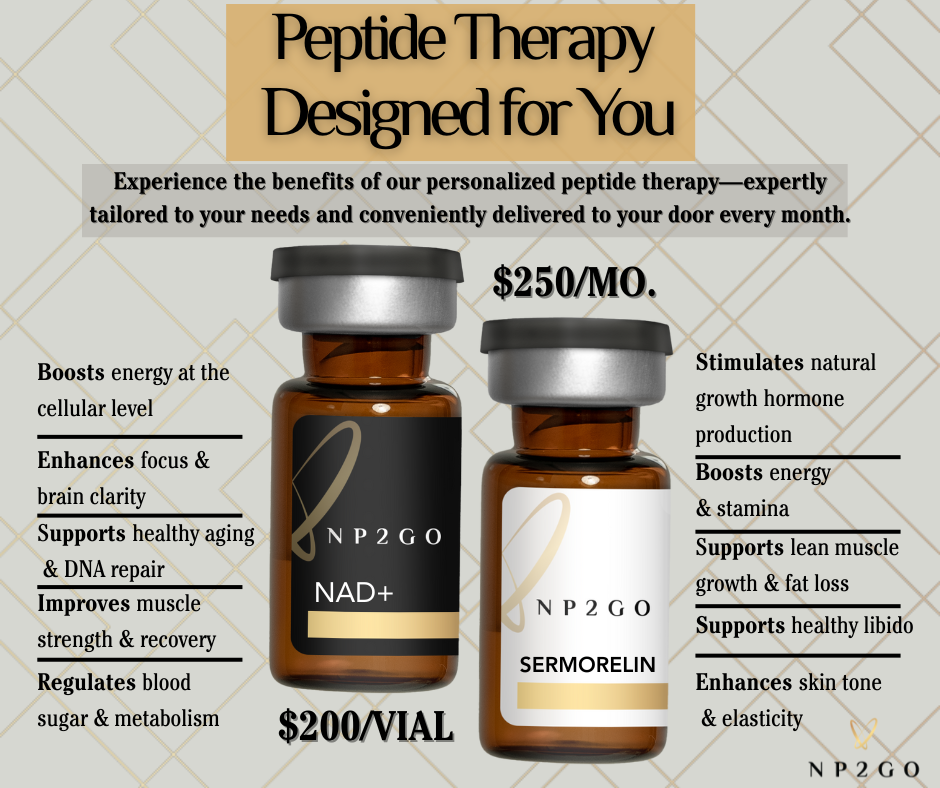
Sermorelin stimulates the body’s natural production of growth hormone, which normally declines with age. Increased growth hormone can improve sleep quality, energy levels, muscle tone, and skin health. For menopausal women, Sermorelin can help reduce fatigue, enhance mental clarity, and support a more restorative sleep cycle.
3. NAD (Nicotinamide Adenine Dinucleotide)
NAD is a critical coenzyme involved in cellular energy production and repair. As hormone levels fluctuate during menopause, many women experience brain fog, low focus, and overall fatigue. NAD therapy supports mitochondrial function, improves cognitive clarity, and boosts energy at the cellular level.
There are no one-size-fits-all solutions. At NP2Go, our clinicians evaluate your health profile, menopause symptoms, and lifestyle factors to create a personalized peptide therapy plan. Whether your goal is better sleep, improved metabolism, hormone balance, or enhanced cognitive function, the right combination of peptides can help you feel more energized, focused, and balanced during menopause.
What’s the Difference Between Peptide Therapy and Hormone Replacement Therapy?
While both peptide therapy and hormone replacement therapy (HRT) aim to restore balance and optimize the body’s natural function, they work in different ways and serve different purposes in menopause care.
HRT involves directly supplementing hormones like estrogen and progesterone that naturally decline during menopause, providing a quicker and more measurable change in hormone levels, which frequently results in faster symptom relief for people with clinically low hormone levels.
Peptide therapy, on the other hand, does not replace hormones. Instead, peptides act as signaling molecules that support the body’s natural processes, such as metabolism, sleep, inflammation control, tissue repair, and cellular energy.
The table below shows the key differences between peptides and HRT.
| Feature | Peptide Therapy | Hormone Replacement Therapy (HRT) |
| How It Works | Signal the body to produce hormones or repair cells naturally | Directly provides the hormones the body is lacking |
| Specificity | Targets specific tissues or functions, like metabolism or tissue repair | Acts systemically, affecting multiple body systems |
| Hormone Type | Mimics natural processes rather than replacing hormones | Often uses bio-identical or synthetic hormones |
| Duration | Typically short-acting; effects occur in pulses | Maintains consistent hormone levels over time |
| Safety | Generally low risk when supervised, with minimal side effects | Higher potential for side effects if dosing isn’t carefully managed |
| Best Use | Supports anti-aging, energy, recovery, and wellness | Addresses menopause symptoms, hormonal deficiencies, and related conditions |
Can You Combine HRT and Peptide Therapy?
HRT and peptide therapy can be used together, but only under proper medical supervision. Because these therapies work in different ways, combining them may offer a more comprehensive approach to managing menopause symptoms for certain women.
HRT focuses on replacing declining hormones; peptide therapy works by supporting the body’s natural signaling systems, helping with areas such as sleep quality, energy levels, metabolism, cognitive function, and recovery.
When used together, peptides may help support symptoms that HRT alone does not fully address, such as persistent fatigue, brain fog, weight gain, or slowed recovery. However, this combined approach is not appropriate for everyone and requires careful evaluation, dosing, and ongoing monitoring.
What to Expect When Starting Peptide Therapy
Here’s what you can expect when you first start peptide therapy:
Initial consultation
Before starting peptide therapy, you’ll meet with an NP2GO clinician either virtually or in the office. During this consultation, your provider will review your medical history, menopause-related symptoms, current medications or supplements, and overall health goals. Lifestyle factors such as sleep quality, stress levels, diet, and physical activity are also discussed, as these can influence how your body responds to peptide therapy.
You’ll also have time to ask questions, understand how peptide therapy works, and discuss what outcomes are realistic based on your health profile.
Lab testing and health assessment
Following your consultation, lab testing may be recommended to establish a baseline and guide treatment decisions. These tests can evaluate hormone levels, metabolic markers, thyroid function, inflammation, and other indicators of overall wellness. Lab results help your provider determine which peptides are most appropriate and whether additional support, such as hormone replacement therapy, may be beneficial.
Personalized treatment plan
Once your assessment and lab results are reviewed, your NP2GO clinician will create a customized peptide therapy plan. The type of peptides prescribed, dosing schedule, and duration of therapy are tailored to your specific symptoms and goals. For women navigating menopause, peptides are often used to support energy levels, metabolism, muscle maintenance, cognitive function, and sleep quality.
Administration and treatment schedule
Peptide therapy is commonly administered through small subcutaneous injections or, in some cases, sublingual formulations. Injections are designed for easy at-home use and involve very small needles. NP2GO provides detailed instructions and education, so you feel comfortable administering your therapy safely and correctly.
The treatment schedule varies depending on the peptides prescribed. Some peptides are used daily, while others are taken several times per week. Consistency is important, as peptides work by gradually supporting cellular communication and biological function.
Ongoing monitoring and adjustments
Regular follow-up appointments are an essential part of peptide therapy. These check-ins allow your NP2GO provider to monitor your response, address side effects, and adjust dosing or peptide combinations as needed. Repeated lab testing may be used to track progress and ensure continued safety and effectiveness.
What Are the Side Effects of Peptide Therapy?
Peptide therapy is generally well-tolerated when prescribed and monitored by a licensed medical provider. However, some side effects may occur, especially during the initial adjustment period.
Common, mild side effects
- Redness, swelling, or tenderness at the injection site
- Mild headaches
- Temporary fatigue
- Nausea
- Digestive discomfort
- Changes in appetite
Less Common Side Effects
- Dizziness
- Temporary sleep changes
- Water retention
At NP2GO, our approach to peptide therapy is centered on safety, comfort, and long-term results. Each treatment plan is carefully personalized to your health needs, with ongoing provider support throughout your therapy. When side effects occur, they are typically mild and can often be managed with simple adjustments such as dosage changes, injection technique guidance, or supportive self-care recommendations.
If you experience any unexpected reactions while undergoing peptide therapy, our clinical team is available to assist you. We encourage open communication to promptly assess symptoms and refine your treatment plan as needed. For most patients, side effects typically subside over time as the body adjusts, allowing therapy to remain both effective and tolerable.
FAQs About Peptide Therapy for Menopause
What are the best peptides for women over 40?
The best peptide for women over 40 depends on their specific symptoms, medical history, and a provider’s evaluation. Options like collagen peptides, GLP-1–based therapies, Sermorelin, and NAD+ can help support skin concerns, metabolism, energy, sleep, and healthy aging.
Are peptides safe during menopause?
Peptides may be safe during menopause when prescribed and monitored by a licensed medical provider. Safety depends on proper screening, dosing, and follow-up. Using peptides without medical supervision increases risks and is not recommended.
What’s the difference between peptides and hormone therapy for menopause?
Hormone therapy replaces declining hormones like estrogen and progesterone to relieve menopause symptoms. Peptides do not replace hormones. Instead, they support the body’s natural signaling related to energy, metabolism, sleep, and recovery, often as a complementary option.
Can peptides help balance hormones?
Peptides do not directly balance or replace hormones. They may support how the body responds to hormonal changes by improving cellular communication, metabolism, and stress response. For this reason, peptides are sometimes used alongside hormone therapy, not instead of it.
Get Personalized Peptide Therapy for Menopause at NP2GO
Peptide therapy offers a promising, science-backed approach to managing menopause symptoms, from boosting energy and supporting metabolism to improving mood and sleep. At NP2GO, we create customized peptide protocols tailored to your unique needs, helping you feel vibrant, balanced, and in control.
We take the time to understand your symptoms, health history, and wellness goals before recommending any treatment. Our licensed providers offer medically supervised peptide therapy, GLP-1–based treatments, and hormone support when appropriate through convenient virtual visits and in-office care. Every plan is tailored, transparent, and designed with your long-term health in mind.
Take action today. Don’t let menopause slow you down. Schedule your personalized consultation with NP2GO now and start your journey to renewed energy, hormone balance, and overall wellness!